
A missing ignition key feels like it should be a dealbreaker, but that’s the wrong assumption. What actually decides how a vehicle gets loaded onto a truck has less to do with the key itself and more to do with whether the vehicle rolls and steers, what drivetrain it has, and whether its parking brake and transmission can be released or shifted.
This guide covers why cars end up keyless in the first place, what a tow crew actually needs to know before they arrive, and what that means if you’re trying to sell one.
Why Do Junk Cars End Up Without Keys?
Missing keys show up for a handful of ordinary reasons, not because anything unusual happened to the vehicle. A car doesn’t need to have been stolen, abandoned, or otherwise troubled for its key to disappear somewhere along the way; in most cases, it’s just an ordinary side effect of time, a move, or a change in who’s been looking after the vehicle. Here’s how it tends to happen.
Lost or Never Had a Spare
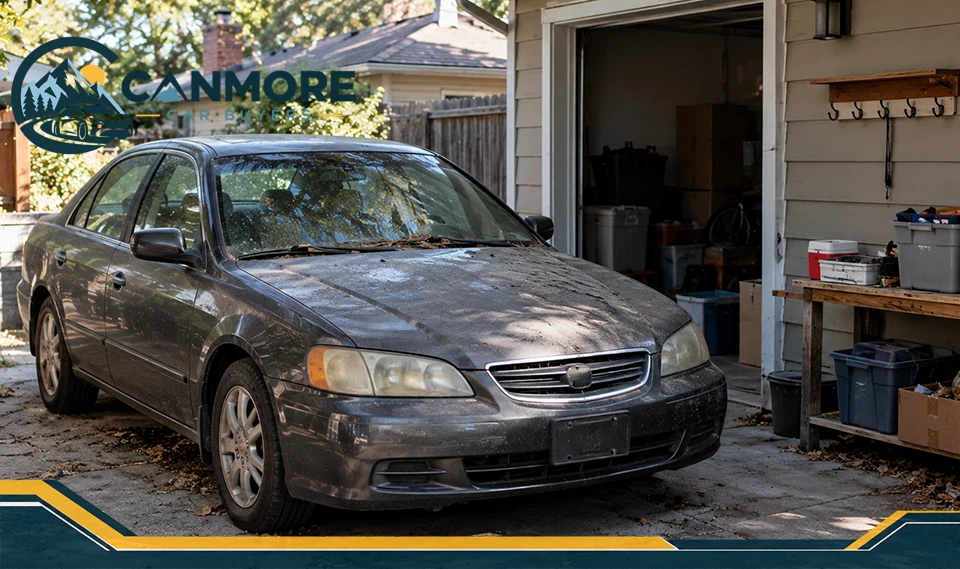
Keys go missing the way most small objects do: a move, a renovation, a jacket that got donated with a key still in the pocket. Some owners never had a spare cut in the first place, so losing the only working key leaves the vehicle without an easy backup. Replacing a lost key on an older vehicle can also cost more than the vehicle is worth once you’re selling it for scrap, which is often the point where people stop trying and just sell the car as it sits.
Long-Sitting Vehicles
A car that’s been parked for years tends to lose track of its keys well before it loses its registration certificate. By the time someone’s ready to deal with the vehicle, the key is often the least of what’s missing, especially if the car changed hands informally, sat in storage, or moved between family members more than once along the way.
Inherited Vehicles
A vehicle that comes from a family member’s estate frequently arrives without a full set of keys, since nobody thought to look for a spare during a difficult time. This is common enough that it rarely raises any flags with a buyer, and it’s usually grouped with the same missing paperwork that inherited vehicles tend to come with anyway.
Modern Keys Are Expensive to Replace
Newer vehicles complicate this further. Many modern vehicles use electronically coded keys or fobs that must be programmed to the vehicle, not just cut to match a lock. Replacing one usually means a locksmith or dealership visit, and the cost can run well past what a non-running vehicle is actually worth. That’s a big part of why a missing key on an older or already-troubled vehicle often just gets left as is rather than replaced.
Does a Missing Key Stop You From Selling a Car?
No. If you’re wondering whether you can sell a car with no keys, the short answer is that a missing key changes how the vehicle gets collected, not whether it can be sold. What matters more is whether the vehicle rolls and steers, what drivetrain it has, and whether its parking brake and transmission can be safely released for towing. Tell the buyer upfront that there’s no key and describe as much of that as you can, and the rest is a logistics question rather than a sale-stopping one. This applies whether the vehicle is missing its only key, has a key that no longer works, or never had a spare cut in the first place.
What Actually Determines How a Car Gets Towed?
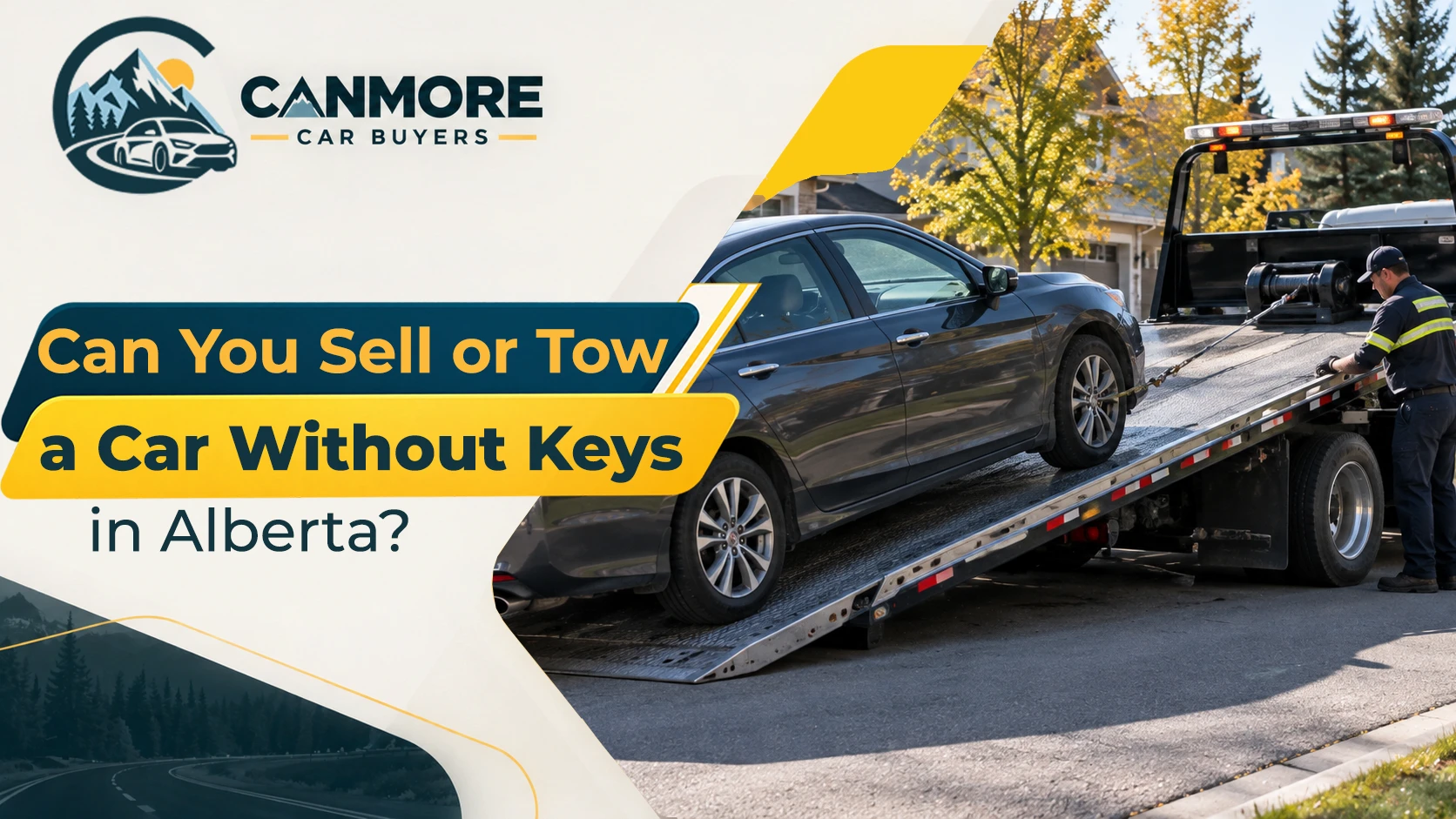
Tow trucks have more than one way to move a vehicle that can’t be started or driven normally, and the choice depends on more than just the key. A missing key isn’t always necessary for loading, but it can still matter when the steering needs to be unlocked, the transmission needs to be shifted into Neutral, or an electronic parking brake needs to be released, since some vehicles need a key turned to accessory position for any of those. The other big factors are whether the vehicle rolls and steers, what drivetrain it has, and what the manufacturer actually recommends.
| Vehicle Condition | Possible Towing Method |
|---|---|
| Rolls and steers freely, standard drivetrain | Wheel-lift, dolly, or flatbed, depending on drivetrain and manufacturer requirements |
| Rolls but steering is locked | Flatbed or other equipment suited to the vehicle |
| AWD or 4WD, regardless of whether it rolls | Often flatbed or all-wheel dollies, since many AWD systems can be damaged if towed with wheels on the ground |
| Doesn't roll at all | Flatbed with a winch, or dollies and skates as needed |
Manufacturer guidance backs this up directly. Kia’s owner’s manual, for example, says AWD vehicles should never be towed with their wheels on the ground and calls for a flatbed specifically when an electronic parking brake won’t release normally.
Toyota’s manual similarly ties the towing method to the vehicle’s drivetrain rather than treating every non-running vehicle the same way. A flatbed is often the most flexible option when there’s real uncertainty, since it avoids relying on the vehicle’s wheels, drivetrain, or steering system during transport, though the tow operator may still need to manage the steering, parking brake, or transmission according to what the vehicle actually requires.
This is why towing a car without keys is rarely the complication people expect; a crew that already handles non-running vehicles is set up for most of what a missing key changes.
What Should You Tell the Buyer Before Pickup?
A short, accurate description upfront saves a wasted trip for everyone, since a crew that shows up expecting a standard tow and finds an AWD drivetrain or a locked steering column has to leave and come back with different equipment. A few details cover almost everything a buyer needs to know before scheduling pickup:
- Whether the vehicle has any keys at all, even a damaged or non-working one. A key that turns but doesn’t start the engine can still matter, since it may be what unlocks the steering or releases an electronic parking brake.
- Whether the wheels turn freely when pushed, or if something’s seized. This affects which equipment gets used, though it isn’t the only factor.
- Whether the vehicle is AWD, 4WD, or a standard drivetrain, and whether the steering is known to be locked. AWD vehicles in particular often need a flatbed or all-wheel dollies regardless of whether they roll normally.
- Where the vehicle is parked, especially if access is tight or the ground is uneven. A crew bringing a flatbed needs more clearance than one bringing a dolly, so this detail shapes the job as much as the vehicle’s condition does.
None of this needs to be precise, and there’s no need to test the steering yourself; describing what you know, including any known issues with the parking brake or drivetrain, is more useful to a tow crew than no information at all, and it’s far better to overshare than to have a truck arrive with the wrong setup for the job.
Towing a Car Without Keys in Canmore and the Bow Valley
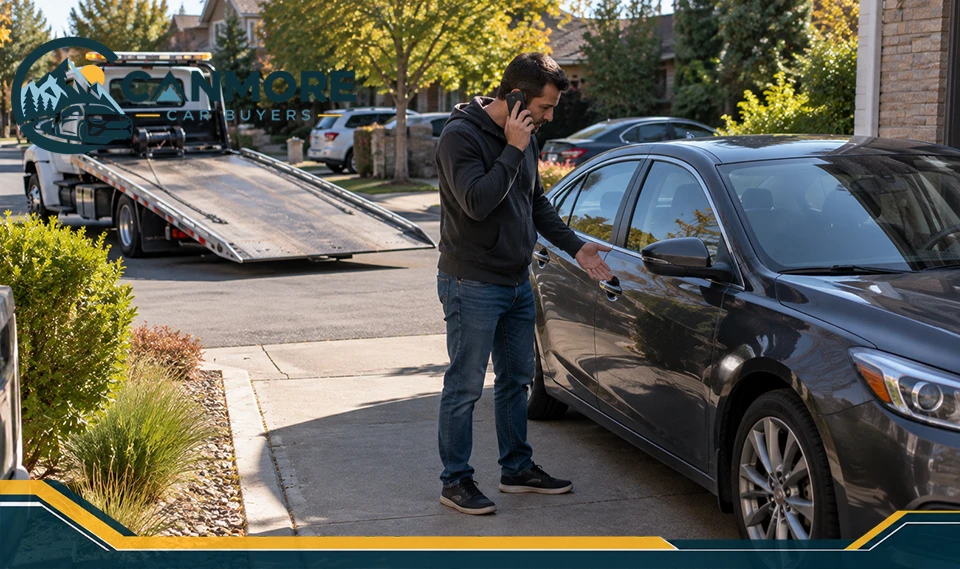
Winter changes this equation a little. A vehicle that’s been sitting through a Bow Valley winter can have wheels frozen to the ground or a parking brake that’s seized on, on top of not having a key, and any one of those on its own can shift a job from a standard tow to a flatbed with extra time built in. Mentioning all of it upfront, not just the missing key, helps a crew show up with the right equipment the first time.
Key Questions Answered
Can I sell my car if I don't have the keys anymore?
Yes. A missing key affects how the vehicle gets picked up, not whether a buyer will take it. Let the buyer know upfront so they can bring the right towing equipment, and the sale itself proceeds like any other, whether the key was lost, damaged, or simply never replaced.
Do I need a spare key for a tow truck to take my car?
Not always. A flatbed or dolly doesn't need to drive the vehicle onto the truck, but a key can still matter if the steering needs to be unlocked, the transmission needs to go into Neutral, or an electronic parking brake needs releasing. Tell the tow operator whether you have a working key before pickup.
What if my car doesn't roll because the wheels are seized?
That's still workable, but it usually means a flatbed with a winch rather than a standard tow. Mention the seized wheels alongside the missing key so the crew arrives with the right equipment the first time, rather than having to reschedule once they see the vehicle in person.
Does a missing key lower the value of a junk car?
A missing key usually affects pickup logistics more than the vehicle's underlying scrap value, since weight, completeness, and parts demand drive most of the number. That said, an individual buyer may account for the extra handling or recovery work in their offer, so it's not something to hide either way.
Is towing still free if my car has no keys?
Often, yes, for qualifying pickups. Ask directly when you call, since it depends on the vehicle and location rather than the key situation specifically, and a buyer can usually confirm this before a truck is ever scheduled to come out.
How Canmore Car Buyers Handles a Car With No Keys
We ask about keys as part of the same conversation where we ask about drivetrain and condition, since the two go together. Free towing may be available for qualifying pickups, including vehicles without keys; ask when you call.
Call Canmore Car Buyers at (587) 807-6797 or email hello@canmorecarbuyers.ca and describe the vehicle’s condition, keys included. We’ll tell you what to expect from pickup before anything is scheduled.
The Final Thoughts
Selling or towing a car with no keys in Alberta is routine, not exceptional. The key itself matters less than most people assume, but it isn’t entirely beside the point either; what actually shapes the job is whether the vehicle rolls and steers, its drivetrain, and whether its parking brake and transmission can be safely released. Describe all of that clearly when you first talk to a buyer, and a missing key becomes a detail to plan around rather than a reason to hold off on selling a car with no keys in the first place.
References
- Alberta Motor Association. Know Before the Tow. https://amainsider.ama.ab.ca/spring-2026/know-before-the-tow
- Kia Owners. Towing service. https://ownersmanual.kia.com/full_webhelp/SW1K/2026/en_RG/topics/t00693.html
- Toyota Owners. If your vehicle needs to be towed. https://assets.sia.toyota.com/publications/en/om-x/OM04011U/topics/chapter7/ch07se020401.html