
Not every part on a vehicle heading for scrap is worth the same amount, and that gap is bigger than most people expect the first time they look into it. A handful of components account for most of a junk car’s value, while plenty of others contribute almost nothing on their own. Understanding the most valuable parts junk car sellers should know about helps explain why a buyer’s offer changes so much based on what’s missing, and it’s also the first thing to understand before deciding whether parting a vehicle out yourself is worth the effort. This guide covers the parts that typically matter most, and the tradeoffs involved in selling a vehicle whole versus breaking it down piece by piece.
Which Parts Are Typically the Most Valuable in a Junk Car?
A short list of components accounts for most of a junk vehicle’s worth, while the rest of the car mainly contributes scrap weight. Understanding what parts are worth money in a scrap car starts with these six categories:
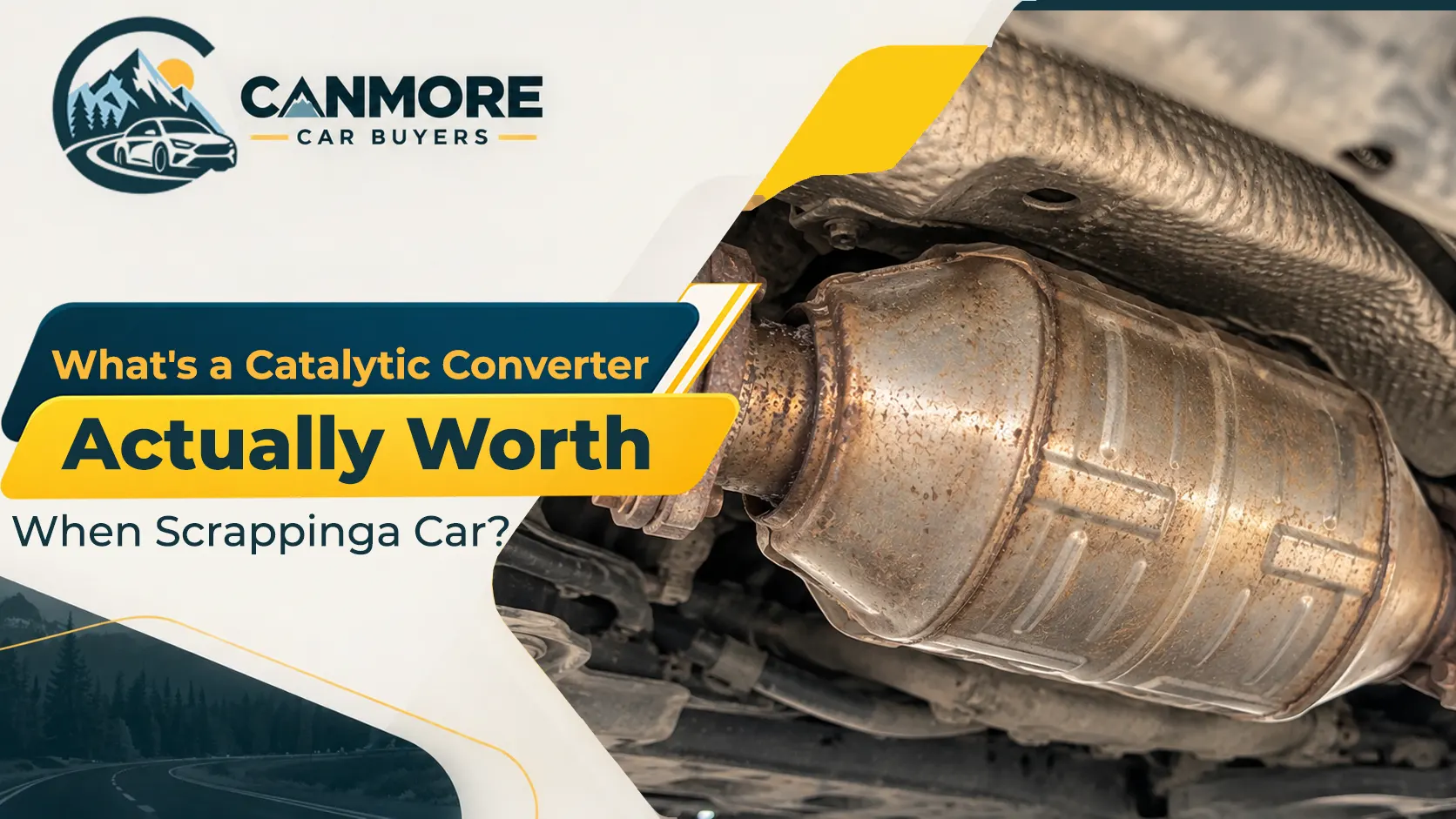
- The catalytic converter. It contains small amounts of platinum, palladium, and rhodium, and its value shifts with the metals market rather than sitting at one fixed number. A catalytic converter can have a significant effect on an offer, depending on the vehicle and the converter’s condition and recoverable materials. We cover this in more detail in our guide to catalytic converter scrap value.
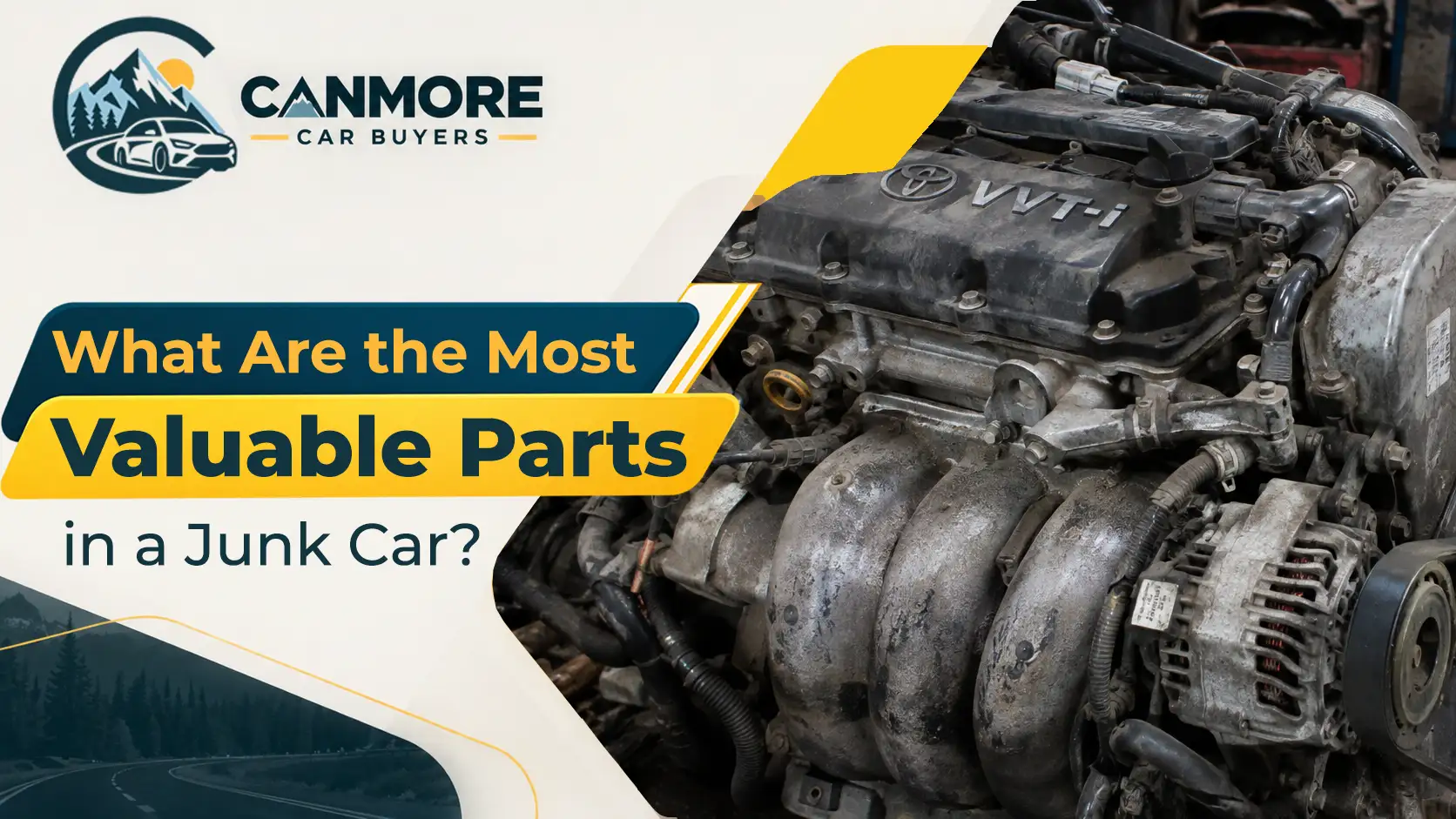
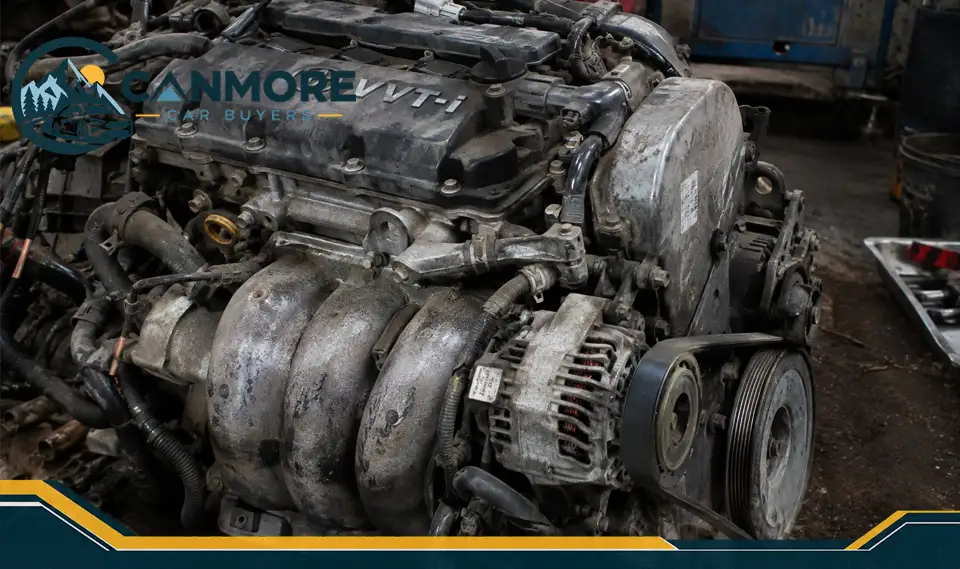
- The engine. A complete, running engine is one of the most in-demand parts for resale, particularly for common makes and models where replacement engines are regularly needed by other owners doing their own repairs. Even a non-running engine can hold value if it’s not seized or badly damaged internally.
- The transmission. Functioning transmissions have a resale market, particularly when they fit common vehicles where replacement units are in demand.
- Wheels and tires. Factory alloy wheels in particular hold resale value, and a full set in good condition is worth noticeably more than a mismatched or damaged one. Tires with meaningful tread left add a bit more on top of what the wheels themselves are worth.
- Electronic modules. Newer vehicles carry computer modules that control everything from the engine to infotainment systems, and these have become a growing source of value as vehicles get more electronics-dependent. Some electronic control modules can have meaningful resale value, particularly when they’re compatible with common vehicles and are difficult or expensive to replace.
- The battery, especially in hybrids. A standard 12-volt battery has modest scrap value. A hybrid or EV traction battery can have substantially more recovery or resale value than a conventional 12-volt battery, although the amount depends on the battery type, condition, and market, since this segment is still far less predictable than the established market for standard batteries.
Should You Part Out a Junk Car Yourself or Sell It Whole?
Parting out a vehicle yourself can capture more value than a single lump-sum offer, in theory, since you’re selling each valuable component separately rather than letting a buyer price the whole vehicle at once. In practice, the math doesn’t always work out that way once you account for the time, tools, and coordination involved in finding buyers for each individual piece.
Removing an engine or transmission safely takes real tools and mechanical know-how, and most sellers don’t have a hoist or the experience to do it without risking damage to a part that was otherwise sellable. Selling parts individually also means finding separate buyers for each one, storing everything until it sells, and handling the fluids that come out of a vehicle during teardown. Alberta has a regulated recycling program for used oil materials, including used oil, oil filters, and several other automotive fluids, through the Alberta Recycling Management Authority, and disposing of these properly rather than dumping them takes an extra step that a buyer handling the whole vehicle would otherwise take care of.
| Factor | Parting out yourself | Selling the vehicle whole |
|---|---|---|
| Potential total value | Higher in theory, if every part sells | Lower per part, but reflects the whole vehicle at once |
| Time investment | Significant: removal, listing, shipping or meeting buyers | Minimal: one call, one pickup |
| Tools and skills needed | Hoist, hand tools, mechanical experience | None |
| Storage | Required until each part sells | Not needed |
| Fluid and waste disposal | Your responsibility | Typically handled by the buyer |
| Number of transactions | Many, each with its own risk of a buyer backing out | One |
Selling the vehicle whole to a buyer who evaluates it for parts and scrap value trades some of that theoretical extra money for a single transaction, one pickup, and none of the storage, tool, or disposal requirements. For most sellers without a shop or mechanical background, that tradeoff favors selling whole, especially once the value of your own time gets factored in.
Selling a Complete vs. Partly Stripped Vehicle in Canmore and the Bow Valley
A vehicle that’s already missing its engine or transmission is worth meaningfully less to a buyer than one that’s still complete, which matters if you’ve been picking away at parts over time before deciding to sell. If you’re weighing whether to pull a few components yourself before calling a buyer in Canmore or the Bow Valley, it’s worth getting a quote on the vehicle as it sits first, since the gap between a whole-vehicle offer and what you’d net parting things out piecemeal is often smaller than it looks on paper. Knowing the most valuable parts junk car buyers actually pay for also helps you have a more informed conversation when you do call, even if you decide selling whole is the simpler route.
Key Questions Answered
What are the most valuable parts in a junk car?
The catalytic converter, engine, transmission, and wheels typically account for most of a junk vehicle's value, along with electronic modules on newer cars and hybrid traction batteries where applicable. The rest of the vehicle mostly contributes scrap metal weight rather than significant standalone value.
What parts are worth money in a scrap car besides the engine?
The catalytic converter, transmission, and a full set of factory wheels are usually worth the most after the engine. Electronic control modules and, on hybrid vehicles, the traction battery have also become more valuable as vehicles carry more electronics, adding another category worth considering.
Is it worth removing parts myself before selling a junk car?
It depends on your tools, mechanical experience, and how much time you're willing to spend. Removing an engine or transmission safely takes real equipment, and selling parts individually means storing them and finding separate buyers rather than one straightforward sale.
Does a hybrid car's battery have scrap value?
Yes, a hybrid or EV traction battery can have substantially more recovery value than a standard 12-volt battery, though the amount depends heavily on the battery type, condition, and market. This segment is still far less predictable than the established market for conventional lead-acid batteries.
How do I dispose of fluids if I remove parts from a junk car myself?
Alberta has a regulated recycling program for used oil materials, including used oil, oil filters, and several other automotive fluids, through the Alberta Recycling Management Authority. Proper disposal takes an extra step compared to selling the vehicle whole, where a buyer typically handles that as part of the process.
How Canmore Car Buyers Evaluates a Vehicle's Parts Value
We look at the vehicle as a whole, factoring in the engine, transmission, wheels, catalytic converter, and overall completeness rather than pricing each part separately on its own. If some components are already missing, that’s accounted for in the offer rather than treated as a dealbreaker. Our Mechanical Problems page covers more of what goes into that evaluation.
Call Canmore Car Buyers at (587) 807-6797 or email hello@canmorecarbuyers.ca and we’ll evaluate your vehicle’s actual condition, parts and all, before anything is scheduled.
The Final Thoughts
The catalytic converter, engine, transmission, and wheels typically carry the most value in a junk car, along with electronic modules and hybrid batteries on newer vehicles. This is why a vehicle’s completeness affects its value more than almost any other factor when selling to a car buyer rather than parting it out piece by piece. Unless you have the tools, time, and a plan for handling fluids properly, selling the vehicle whole is usually the more practical route.
References
- Alberta Recycling Management Authority. Used Oil Materials Recycling Program. https://www.albertarecycling.ca/programs/used-oil/
- Alberta Recycling Management Authority. Tire Recycling Program. https://www.albertarecycling.ca/programs/tires/
- Environmental Registry of Ontario. Canadian Battery Association comment on end-of-life vehicle battery recycling. https://ero.ontario.ca/comment/32556