
The junkyard vs car buying company question comes down to how much you want to handle yourself and what condition your vehicle is actually in. Both are legitimate ways to get rid of a vehicle that’s reached the end of the road, but calling around without knowing the difference can leave you comparing two very different offers as if they were the same thing. A junkyard prices mainly off parts and scrap weight, while a car buying company evaluates the whole vehicle and often handles pickup and paperwork too. Sorting that out before you commit to either one is worth doing upfront. This guide breaks down what each option actually involves, compares them side by side, and covers which type of vehicle tends to suit which route.
What Does a Junkyard Actually Do With Your Car?
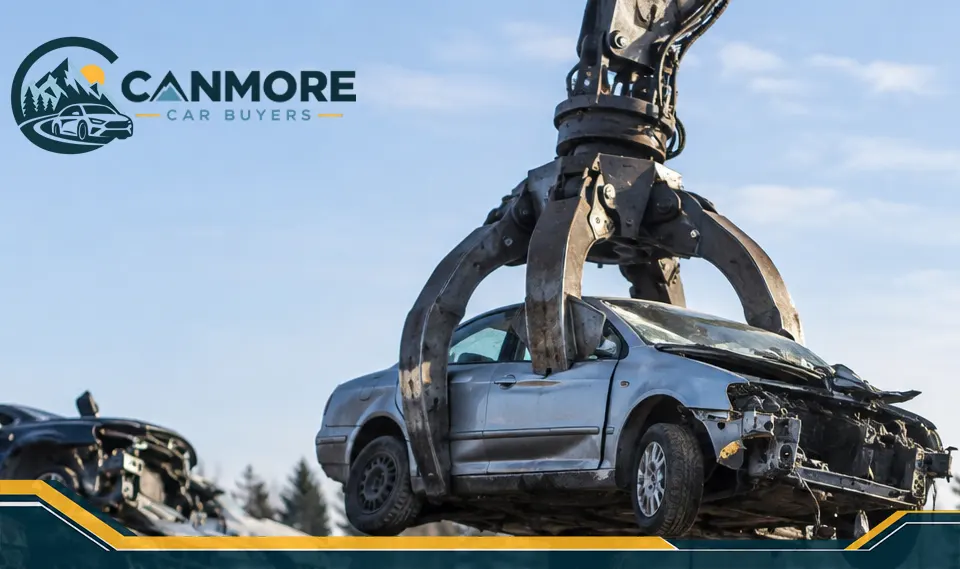
A junkyard or auto-wrecking business typically evaluates a vehicle for its reusable parts and remaining scrap value rather than the vehicle as a whole. “Junkyard” itself isn’t a formal Alberta licence category; a business that dismantles and recycles vehicles for parts as its main activity generally operates under AMVIC’s automotive repair licence class. This is also a separate thing from a regulated scrap-metal transaction, which specifically covers items like catalytic converters and lead-acid batteries under Alberta’s scrap-metal rules, rather than the vehicle dismantling business as a whole. A few things tend to be consistent across most junkyards:
- Pricing centers on parts value and scrap weight rather than the vehicle’s overall condition or history.
- Pickup policies vary by business; some require the seller to arrange transportation, while others offer pickup themselves.
- Paperwork support is usually basic, covering what’s legally required for the transaction rather than walking you through the process step by step.
- The evaluation moves quickly, since the price is mostly a function of what parts remain usable rather than a detailed look at the vehicle as a whole.
That focus is an advantage for some sellers and a drawback for others, depending on how much value might otherwise be sitting in the vehicle’s overall condition rather than its individual components.
For a vehicle that’s already been stripped for parts, or one that’s really only worth its scrap weight, a junkyard is often the most direct and appropriate option, and trying to get a whole-vehicle evaluation on a car with nothing much left to evaluate doesn’t usually gain you anything.
What Does a Car Buying Company Actually Do With Your Car?
A local car buying company evaluates the whole vehicle rather than pricing it purely on parts and weight. That includes running condition, completeness, and what the vehicle might be worth for resale or export, not just what a dismantler could get from breaking it down. Many car buying companies offer pickup as part of the transaction, and some include it at no additional cost, and walk through the Alberta-specific paperwork, like proof of ownership and lien checks, as part of the sale rather than leaving it entirely to you.
This approach tends to suit sellers who’d rather make one call and have the details handled than manage pickup logistics and paperwork on their own. It can also result in a stronger offer for a vehicle that still has some running or resale value, since that value gets factored in rather than left on the table. The trade-off is that a car buying company’s process makes less sense for a vehicle that’s already been picked apart, since there’s little left for a whole-vehicle evaluation to pick up on beyond what a junkyard would already account for.
Junkyard vs. Car Buying Company: Side-by-Side Comparison
Both routes can be legitimate businesses operating within Alberta’s rules; the difference in this junkyard vs car buying company comparison is mainly in what they’re set up to evaluate and how much they handle on your behalf.
| Junkyard | Car Buying Company | |
|---|---|---|
| How the price is set | Mainly parts value and scrap weight | Whole-vehicle evaluation, including condition and resale potential |
| Pickup | Often arranged and paid for by the seller | Usually included, sometimes free for qualifying vehicles |
| Paperwork support | Basic, legally required minimum | Walked through as part of the sale |
| Best fit | Vehicles already stripped or worth scrap value only | Vehicles with some resale, parts, or running value left |
| Typical AMVIC licence activity, where applicable | Automotive repair licence class (dismantling and recycling) | Retailer or wholesaler licence class |
Which Vehicles Suit Which Route?
If you’re trying to decide whether to sell to a junkyard or a car buyer, no title, no running engine, and heavy damage don’t rule out either option, but they do shift which one makes more sense. A quick gut check on the vehicle’s actual state usually points toward one route pretty clearly:
- A vehicle that’s already missing major parts tends to fit a junkyard well, since there’s little left to evaluate beyond scrap weight.
- A vehicle that still runs or has meaningful resale value may be better suited to a car buying company that evaluates the vehicle as a whole, since that value gets factored in rather than treated as parts alone.
- A vehicle with complicated paperwork, like a lien, missing documents, or an estate situation, may be easier to coordinate through a buyer that helps with that as part of the process.
- A vehicle you’re comfortable hauling yourself removes one of the main advantages a car buying company offers, which can make a junkyard’s simpler process worth considering.
Selling to a Junkyard or Car Buyer in Canmore and the Bow Valley
Distance changes the math here more than it would in a bigger city. A junkyard that expects you to arrange your own tow becomes a bigger ask when the nearest one is a real drive from Canmore, while a company that includes pickup absorbs that distance as part of doing business locally. It’s worth weighing that logistics difference alongside the price itself, not just comparing the two numbers on their own. A vehicle parked on a rural property or dealing with winter access adds another reason pickup convenience is worth factoring in, since arranging your own tow from a harder-to-reach location can end up costing more than the difference in price between the two options.
Key Questions Answered
Is it better to sell to a junkyard or a car buying company?
It depends on the vehicle. A junkyard tends to suit a car that's already stripped for parts or worth scrap value only, while a car buying company often makes more sense for anything with running, resale, or parts value left, since it evaluates the whole vehicle rather than pricing it purely on weight.
Do junkyards handle pickup and towing?
Not always. Many junkyards expect the seller to arrange and pay for their own tow, while car buying companies more often include pickup as part of the service, sometimes at no cost for qualifying vehicles. It's worth asking directly before assuming either way.
Will a junkyard pay more than a car buying company?
Not necessarily, and it depends on the vehicle. A junkyard's price mainly reflects parts and scrap weight, while a car buying company factors in the whole vehicle, which can result in a higher offer for anything with resale or running value left.
Do junkyards need to be licensed in Alberta?
Businesses that dismantle and recycle vehicles as their main automotive activity generally operate under AMVIC's automotive repair licence class. You can check a specific business's licence through AMVIC's online database before agreeing to a sale, the same way you'd check any automotive business operating in the province.
Is a junkyard ever the better choice?
Yes, particularly for a vehicle that's already been stripped of major parts or is realistically only worth scrap weight at this point. In that situation, a junkyard's more direct, parts-focused process can be a better fit than a whole-vehicle evaluation that wouldn't turn up much extra value anyway.
How Canmore Car Buyers Fits Into This
We operate as a car buying company rather than a junkyard: we evaluate the whole vehicle, handle pickup throughout Canmore and the Bow Valley, and walk through the Alberta paperwork with you rather than leaving it to figure out on your own. Our Why Choose Us page covers more of what that looks like in practice.
Call Canmore Car Buyers at (587) 807-6797 or email hello@canmorecarbuyers.ca and we’ll give you a straightforward evaluation based on your vehicle’s actual condition.
The Final Thoughts
There’s no universally better choice between a junkyard and a car buying company; it depends on what’s left of the vehicle and how much you want handled for you. A junkyard suits a vehicle that’s already stripped down to scrap value, while a car buying company tends to make more sense for anything with some running, resale, or parts value left, especially once paperwork and pickup are factored in. Whether you decide to sell to a junkyard or a car buyer, comparing the two on more than just the headline price is usually worth the extra few minutes.
References
- Alberta Motor Vehicle Industry Council. Business licence classes. https://www.amvic.org/business/business-licence/business-license-classes/
- Government of Alberta. Scrap metal transactions. https://www.alberta.ca/scrap-metal-transactions
- Alberta Motor Vehicle Industry Council. Buying used. https://www.amvic.org/consumer/buying-a-vehicle/buying-used/